
MBR Membrane Series
Widely‑deployed for pharmaceutical, food‑processing, fermentation, chemical, steel‑making, textile, oilfield reinjection‑water, landfill leachate, wastewater treatment and water‑reuse projects.
Membrane Bioreactor (MBR) technology relies on high‑activity microorganisms inside the reactor to break down organic pollutants in wastewater for effective water purification. Replacing conventional secondary sedimentation tanks with membrane separation units greatly boosts solid‑liquid separation performance and delivers high‑quality permeate water. It effectively resolves common pain points of conventional activated‑sludge processes, such as sludge bulking and low mixed‑liquor suspended solids, which often prevent effluent from meeting water‑reuse standards.
The core of an MBR system is the high‑performance submerged MBR membrane module. It operates under negative‑pressure suction filtration, consuming 10‑20 times less energy than pressurized side‑stream membrane units. With a simple system layout, continuous scouring from aeration airflow and wastewater flow minimises scaling and sludge fouling on the membrane surface, supporting reliable long‑term operation.

Curtain‑Style MBR Membrane
Hollow‑fiber curtain configuration, high flux, lightweight build and straightforward maintenance. Suitable for municipal sewage, domestic wastewater and industrial water‑reuse applications.

Column‑Curtain MBR Membrane
Submerged UFR ultrafiltration design. Delivers superior aeration efficiency, low power draw, robust backwash resistance and excellent flux recovery. Optimised for high‑strength wastewater and energy‑saving MBR systems.
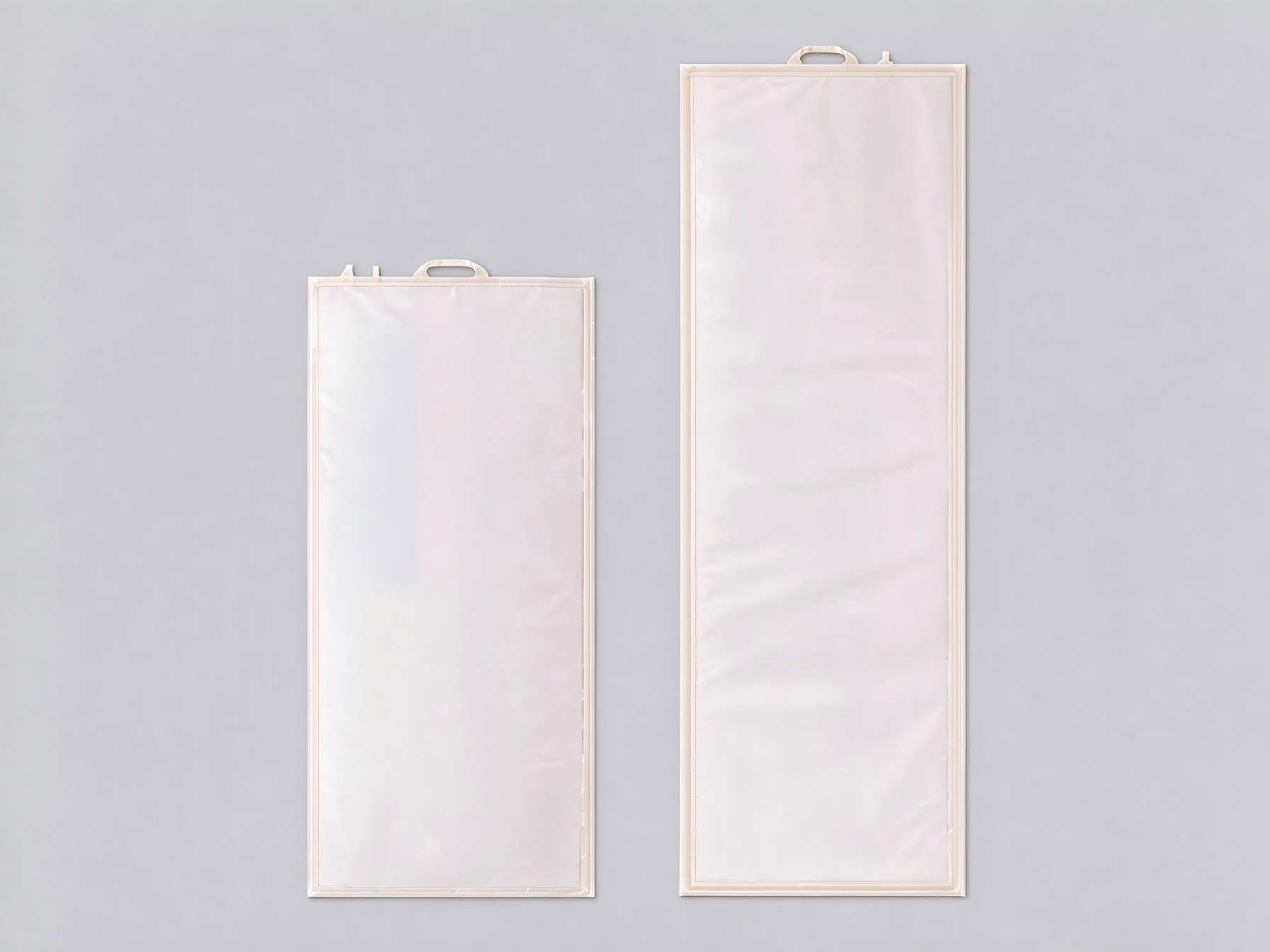
Flat‑Sheet MBR Membrane
Modular construction for simple installation and flexible custom assembly. Ideal for large‑scale wastewater plants and centralized water‑reuse facilities within industrial parks.
Key Technical Advantages of Our MBR Membranes
Application Fields
FAQ
Q:What is an MBR membrane? How does it differ from conventional activated‑sludge processes?
A:A Membrane Bioreactor (MBR) is an advanced wastewater‑treatment technology that combines biochemical degradation with membrane separation. Compared with traditional activated‑sludge systems, MBR offers these key benefits:
- More stable effluent quality; turbidity below 1 NTU
- Over 30 % reduction in footprint requirements
- Secondary sedimentation tanks are not required
- Lower excess‑sludge production
- Resistance against sludge bulking incidents
- Direct compatibility with water‑reuse workflows
Q:What are the differences between curtain‑style, column‑curtain and flat‑sheet MBR membranes?
A:Curtain‑Style MBR Membrane: Lightweight structure, well‑suited for municipal and domestic sewage.
Column‑Curtain MBR Membrane: Higher aeration efficiency, energy‑saving design and excellent flux recovery.
Flat‑Sheet MBR Membrane: Strong fouling resistance, ideal for difficult‑to‑treat wastewater such as textile‑dyeing and chemical effluents.
Select the appropriate membrane type according to your water quality, footprint constraints and energy‑consumption targets.
Q:What is the typical service lifespan of MBR membranes?
A:PVDF membrane fibres feature excellent oxidation resistance and high mechanical strength. Under normal operating conditions, service life can reach 3‑5 years or longer.
Key influencing factors:
- Inlet feed‑water quality
- Cleaning frequency and cleaning protocols
- Aeration volume and operational management
- Operation within recommended TMP (Trans‑Membrane Pressure) ranges
Q:What effluent quality can MBR membranes achieve?
A:Permeate turbidity: < 1 NTU
Suspended‑solid removal: 100 % (> 1 μm particle size)
Microorganism removal rate: 99.999 %
Produces stable feed water for water‑reuse systems, RO pre‑treatment and industrial process‑water supply.
Q:What are typical membrane flux values? How should I select a suitable model?
A:Flux performance varies by membrane type:
- Curtain‑Style MBR: 8‑22 L/m²·h
- Column‑Curtain MBR: Higher flux with 20 % improved aeration efficiency
- Flat‑Sheet MBR: Stable flux for heavily‑fouling feed water.
Model selection is determined by:
- Inlet‑water parameters (COD, SS, oil & grease, colour)
- Overall treatment capacity
- Available installation footprint
- Energy‑saving requirements
Q:Are MBR membrane systems energy‑intensive?
A:The column‑curtain MBR adopts root‑level aeration for membrane fibres, cutting aeration demand by more than 20 %. Its overall energy consumption is 10‑20 times lower than conventional pressurized filtration setups.
Looking for Custom‑Tailored Solutions?
We provide technical guidance, product selection support and fast quotation services.