
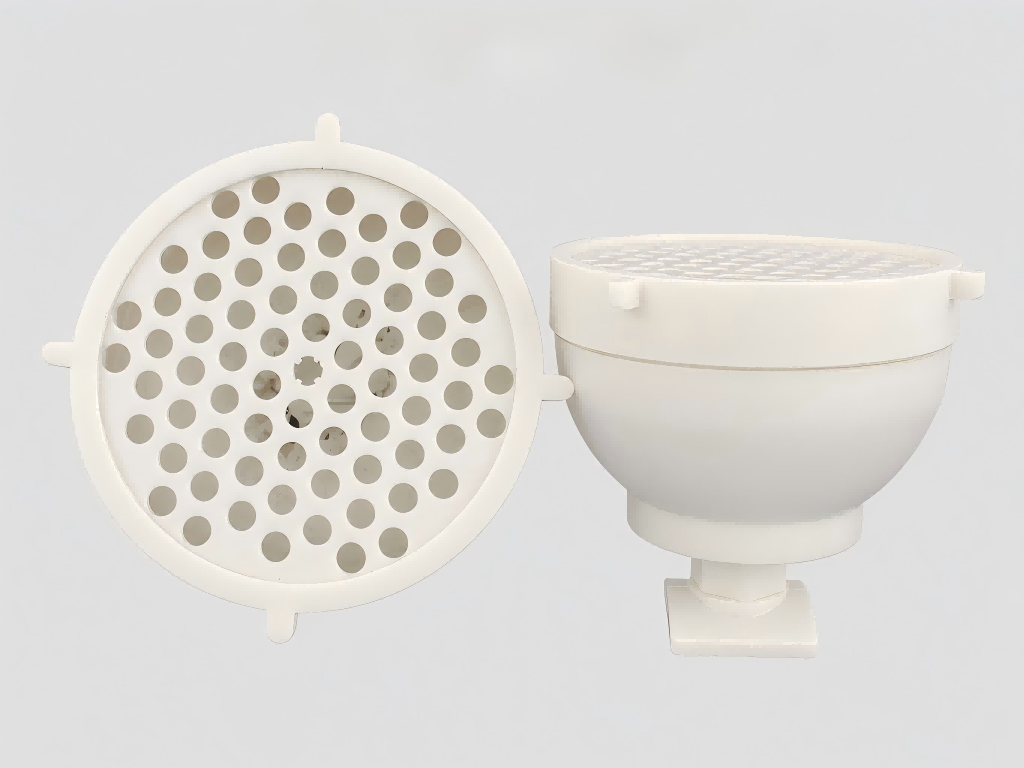
Dynamic Aerators
Rotational oxygenation · Efficient mixing · Energy‑saving & durable performance
Dynamic aerators are high‑efficiency aeration units that combine mechanical agitation with gas diffusion. Equipped with rotating impellers and gas‑liquid mixing structures, they deliver high oxygen‑transfer rates and uniform aeration output. They are widely applied for high‑strength organic‑wastewater projects, biochemical tanks, oxidation ditches, SBR and MBR biological treatment workflows.
Compared with conventional fine‑pore aerators, dynamic aerators offer outstanding advantages including anti‑clogging performance, superior oxygenation efficiency and simplified maintenance.
Product Models
| Model Category | Construction Style | Dimension (mm) | Material | Drive Type | Typical Application |
|---|---|---|---|---|---|
| Standard Dynamic Aerator | Rotating‑impeller design | Φ200‑Φ400 | ABS, PVC, Stainless steel | Motor‑driven | Municipal sewage, biochemical tanks |
| High‑efficiency Energy‑saving Dynamic Aerator | Swirl‑mix configuration | Φ250‑Φ400 | Stainless steel, EPDM | Motor‑driven | Industrial wastewater, oxidation ditches |
| Corrosion‑resistant Dynamic Aerator | Anti‑corrosion build | Φ250 | PTFE, PVC | Motor‑driven | Chemical, electroplating and pharmaceutical wastewater |
| Retractable Lift‑out Dynamic Aerator | Modular unitised structure | Φ250 | ABS, EPDM | Motor‑driven | Tank retrofits, high‑maintenance basins |
Structural Features
Spinning impellers generate intensive gas‑liquid mixing, achieving oxygen‑utilisation efficiency of 35‑45 %.
Rotational shearing action prevents sludge accumulation and pore blockage.
Thorough gas‑liquid contact and broad aeration range, well‑suited for deep‑water tanks.
Manufactured from stainless‑steel or PTFE materials to withstand acid‑alkali environments and long‑term ageing.
Modular construction enables fast disassembly, assembly and routine maintenance.
Performance Specifications
| Item | Specification |
|---|---|
| Aerator Dimensions | Φ200‑Φ400 |
| Operating Air Flow | 3‑10 m³/h |
| Oxygen Utilisation Efficiency | 35‑45 % |
| Aeration Head Loss | 150‑250 mmH₂O |
| Material | ABS, PVC, Stainless steel, PTFE |
| Drive Type | Motor‑driven |
| Mounting Type | Fixed / Retractable lift‑out |
| Applicable Water Depth | 2.5‑6.0 m |
| Service Life | 5‑10 years (subject to material and operating conditions) |
Product Advantages
Selection Guide
| Selection Factor | Available Options | Description | Recommended Use‑case |
|---|---|---|---|
| Construction Type | Rotating‑impeller | Intensive gas‑liquid mixing, high oxygen‑transfer efficiency | Municipal sewage, biochemical tanks |
| Swirl‑mix | Uniform mixing with excellent energy‑saving effect | Industrial wastewater, oxidation ditches | |
| Material Options | Stainless steel | High mechanical strength and corrosion resistance | Industrial‑wastewater treatment systems |
| PTFE | Acid‑alkali & high‑temperature resistance | Chemical & electroplating wastewater | |
| Mounting Style | Fixed‑mount | Stable and robust for new‑build facilities | Municipal wastewater treatment plants |
| Retractable lift‑out | Easy servicing for retrofit projects | Industrial‑wastewater treatment systems |
CONTACT US | REQUEST A QUOTE
Similar Products
Related Products
FAQ
Q:What are the differences between dynamic aerators and fine‑bubble aerators?
A:Dynamic aerators realise gas‑liquid mixing through mechanical rotation for higher oxygen‑transfer efficiency and superior anti‑clogging performance. Fine‑bubble aerators rely purely on gas diffusion and are more suitable for low‑loading treatment systems.
Q: What maintenance interval is recommended for dynamic aerators?
A: Inspect impeller and bearing conditions every 6‑12 months; perform regular cleaning and lubrication work.
Q: What oxygen‑utilisation performance can be expected?
A: Oxygen‑utilisation efficiency reaches 30‑40 % under 3‑5 m operating water depth.
Q: Are custom‑built specifications supported?
A: Yes. Custom dimensions and materials can be supplied according to tank depth, airflow and process requirements.
Q: Can dynamic aerators work together with tube or disc fine‑bubble aerators?
A: Yes. Combined aeration layouts improve overall oxygen‑transfer efficiency and reduce energy consumption.
Q: Can dynamic aerators operate in shallow‑water conditions?
A: Yes. However, impeller diameter and rotating speed shall be adjusted according to water depth. A minimum depth of ≥2.5 m is recommended for optimal oxygenation; select smaller‑diameter, high‑speed models for shallower basins.
Q: How frequently do impellers or bearings require replacement?
A: Impellers typically last 3‑5 years. Bearings should be inspected every 12‑18 months depending on service conditions. Carry out timely maintenance if abnormal noise, speed drop or excessive vibration occurs.
Q: Are dynamic aerators suitable for wastewater with high solids or high viscosity?
A: Yes. Dynamic aerators generate powerful gas‑liquid mixing via mechanical rotational shearing instead of fine‑pore diffusion. They maintain stable operation and resist clogging for wastewater with high suspended‑solid content, high viscosity and high organic loading.
Need Custom‑Tailored Solutions?
We provide technical support, product selection guidance and fast quotation services.