
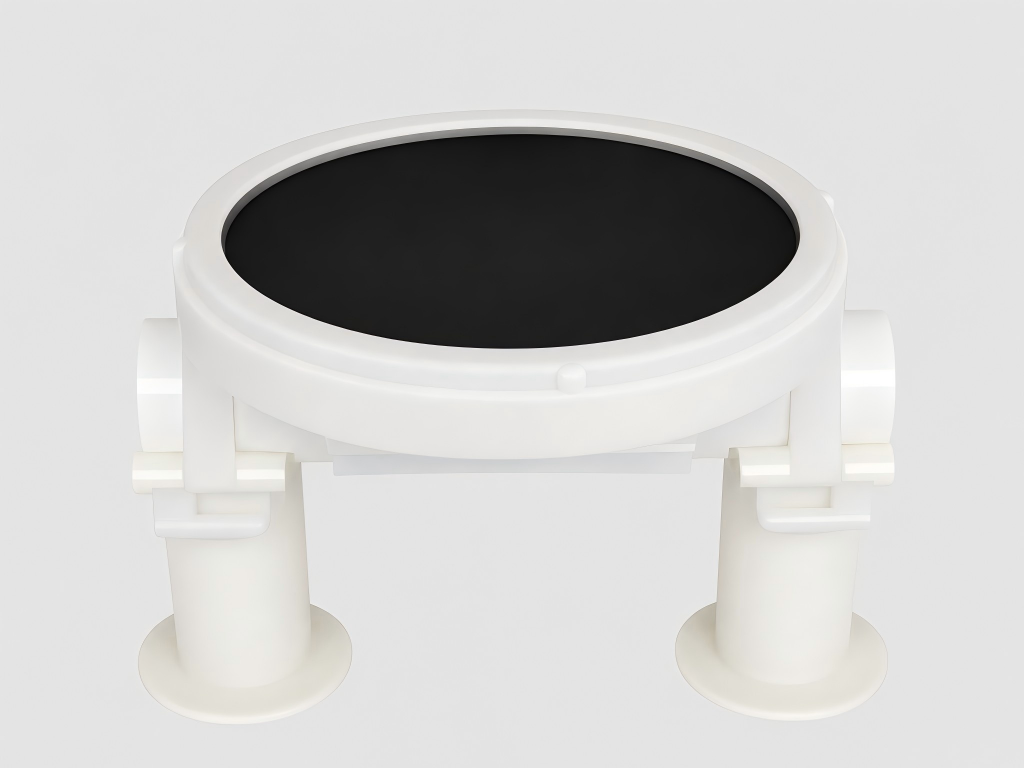
Membrane Disc Fine‑Bubble Aerator
Fine uniform bubbles · High oxygen transfer efficiency · Anti‑clogging design · Stable aeration performance
Membrane disc fine‑bubble aerators are high‑efficiency aeration components. Microslits across the elastic membrane generate fine, evenly distributed bubbles to deliver excellent oxygen transfer, low power draw and consistent aeration output.
They are widely used in municipal wastewater treatment plants, biochemical tanks, aeration basins, oxidation ditches, MBR systems, plus industrial wastewater projects for chemical, food, pharmaceutical and electroplating sectors.
Product Models
| Model Category | Construction Style | Dimension (mm) | Membrane Material | Connection Type | Typical Application |
|---|---|---|---|---|---|
| Screw‑in Disc Aerator | Threaded connection | Φ215 / Φ260 / Φ300 | EPDM, Silicone, NBR | G3/4, G1, NPT | Municipal sewage, biochemical tanks, oxidation ditches |
| Snap‑in Disc Aerator | Prong‑snap clip‑on | Φ215 / Φ260 / Φ300 | EPDM, Silicone, NBR | Clip‑on | Tank retrofits, intermittently operated basins |
| Dome‑Shaped Disc Aerator | Anti‑clogging dome geometry | Φ215 / Φ260 / Φ300 | EPDM, Silicone, NBR | Threaded | High‑strength wastewater, variable‑quality process tanks |
| Single‑Orifice Disc Aerator | Single‑orifice fine‑bubble structure | Custom sizes | EPDM | Push‑in connection | Biofilters, ceramsite media filter tanks |
| Retractable Lifting‑type Disc Aerator | Lift‑out serviceable design | Φ215 / Φ260 / Φ300 | EPDM, Silicone, NBR | Quick‑connect | High‑maintenance aeration basins, retrofit projects |
Core Features
Small‑diameter bubbles create large gas‑liquid interfacial area for homogeneous diffusion and superior oxygenation performance.
Dome‑shaped profile plus top sealing gasket effectively prevents sludge back‑flow and pore blockage.
Dome‑form rubber membrane distributes stress evenly, reduces fatigue deformation and minimises tearing risk.
Membrane options: EPDM, silicone, NBR. Support base manufactured from high‑grade engineering plastic.
Suitable for cyclic aeration cycles; sludge build‑up across membrane surfaces is kept low.
Performance Specifications
| Item | Specification |
|---|---|
| Disc Diameter | Φ215 / Φ260 / Φ300 |
| Overall Oxygen Mass‑transfer Coefficient | kla(20℃) 0.204‑0.337 min⁻¹ |
| Oxygenation Capacity | 0.112‑0.185 KgO₂/m³·h |
| Effective Service Area | 0.25‑1.0 m² per unit (subject to size) |
| Air Flow Rate | 1.5‑3.0 m³/h |
| Average Pore Size | 80‑100 μm |
| Aeration Head Loss | 180‑280 mmH₂O |
| Oxygen Utilisation Efficiency (3.2 m water depth) | 18.4‑27.7 % |
| Standard Aeration Efficiency | 4.46‑5.19 KgO₂/kWh |
| Membrane Material | EPDM, Silicone, NBR (domestic / imported grades) |
| Mounting Height | 200‑270 mm above tank floor |
Product Advantages
Selection Guide
| Selection Factor | Available Options | Description | Recommended Use‑case |
|---|---|---|---|
| Membrane Material | EPDM | Cost‑effective for municipal applications, excellent anti‑ageing performance | Municipal sewage, biochemical tanks, oxidation ditches |
| Silicone | High elasticity, good low‑temperature tolerance | Cold‑climate installations, low‑temperature process systems | |
| NBR | Oil‑resistant and chemically stable for industrial effluents | Chemical, pharmaceutical, electroplating & food‑industry wastewater | |
| Construction Style | Threaded screw‑in | Secure sealing, straightforward installation | New‑build aeration tanks, standard basin geometries |
| Snap‑in clip‑on | Quick clip assembly, ideal for retrofits | Tank retrofits, intermittently‑run aeration basins | |
| Dome‑shaped | Anti‑clogging & anti‑back‑flow, finer bubble output | High‑strength wastewater, challenging variable‑quality tanks | |
| Application Scenario | Biochemical / Aeration Basins | Main‑stream process, high oxygen‑transfer rates | Municipal wastewater treatment plants |
| Filter / Ceramsite‑media Tanks | Single‑orifice aerator delivers even bubble spread | Biofilters, MBR systems | |
| Deep‑basin / High‑air‑volume Systems | Can be combined with tube aerators | Industrial‑wastewater, high‑loading biological processes |
CONTACT US | REQUEST A QUOTE
Similar Products
Related Products
FAQ
Q:What service life can I expect from membrane disc fine‑bubble aerators?
A:Typical service life for EPDM membranes is 3‑5 years. Silicone and NBR membranes achieve 5‑8 years under normal operating conditions.
Regular inspection of membrane elasticity and slit condition helps extend overall system lifespan.
Q:Are these aerators prone to clogging?
A:The dome‑shaped geometry together with angled slit openings prevents sludge back‑flow and blockage.
Stable aeration performance is maintained even under intermittent cycles or high‑strength wastewater loading.
Q:Which treatment processes are compatible with these aerators?
A:Suitable for A/O, A²/O, SBR, oxidation ditch, MBR and other mainstream municipal wastewater workflows.
Also applicable for aeration and oxidation‑reaction systems for industrial effluents.
Q:How do I select the right membrane material?
A:EPDM — municipal and general‑purpose wastewater
Silicone — low‑temperature environments or high‑elasticity requirements
NBR — oil‑bearing and chemical‑rich industrial wastewater
Q:What is the suggested installation height?
A:Recommended mounting height: 200‑270 mm above tank floor. Around 200 mm for push‑flow set‑ups; adjust according to tank geometry and airflow demand.
Q:How should the aeration piping network be arranged?
A:Air manifolds should be laid out in a ring‑loop configuration for balanced pressure distribution.
Main pipe velocity: 10‑15 m/s; branch pipe velocity: 5 m/s.
Isolation valves shall be fitted for each aeration bank to enable airflow regulation.
Q:What oxygen‑transfer performance can be achieved?
A:At 3.2 m submergence depth, oxygen utilisation reaches 18.4‑27.7 % with standard aeration efficiency of 4.46‑5.19 KgO₂/kWh.
Energy savings of roughly 40 % versus older perforated‑pipe or coarse‑bubble aerators.
Q:Do these aerators support intermittent aeration cycles?
A:Yes. Self‑closing membrane slits inhibit water back‑flow, making them suitable for periodic / cyclic aeration operation.
Q:Can custom connection or mounting configurations be supplied?
A:Yes. Multiple thread standards including G3/4, G1 and NPT are supported; threaded, snap‑clip and quick‑connect mounting styles are available.
Q:What is the recommended maintenance interval?
A:Inspect membrane elasticity and slit condition every 6‑12 months. Clean or replace membranes if uneven bubbling or rising head‑loss is observed.
Q:What are the energy‑saving benefits?
A:Delivers 30‑40 % lower energy consumption compared with legacy aerators, with up to 40 % higher treatment capacity at equal airflow.
Well‑suited for energy‑saving retrofit projects and high‑efficiency biological systems.
Need Custom‑Tailored Solutions?
We provide technical support, product selection guidance and fast quotation services.