
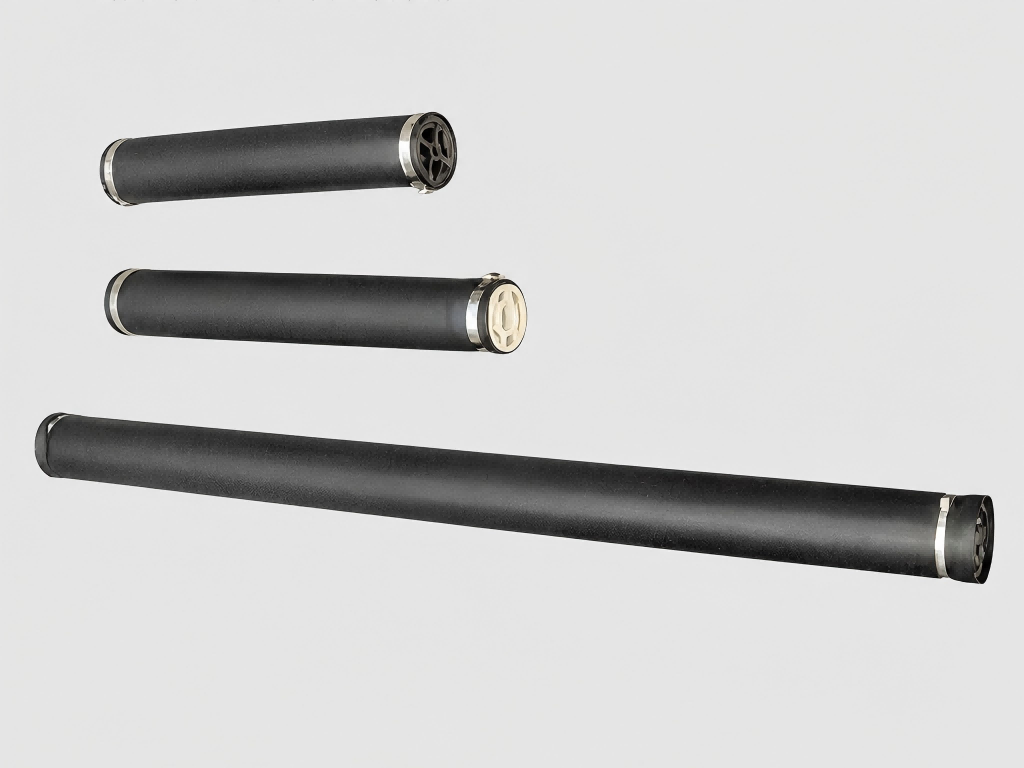
Tube Fine‑Bubble Aerators
Fine‑pore aeration · High oxygen‑transfer efficiency · Flexible installation · Easy maintenance
Tube fine‑bubble aerators are high‑performance fine‑pore aeration units manufactured with premium elastic membranes. Their tubular structure releases fine, evenly dispersed bubbles for outstanding oxygen‑transfer performance, low power consumption and reliable operation. They are widely adopted for deep‑water tanks, high‑air‑volume systems, industrial‑wastewater treatment, biochemical basins, oxidation ditches, MBR and other biological workflows.
Compared with membrane disc fine‑bubble aerators, tube aerators deliver broader aeration coverage and greater installation flexibility, making them especially suitable for large‑scale or deep aeration tanks.
Product Models
| Model Category | Construction Style | Dimension (mm) | Membrane Material | Connection Type | Typical Application |
|---|---|---|---|---|---|
| Standard Tube Aerator | Fine‑pore tubular element | Φ63×1000 / Φ90×1000 | EPDM, Silicone | Quick‑connect / Threaded | Municipal sewage, biochemical tanks |
| Retractable Lift‑out Tube Aerator | Service‑lift design | Φ63×1000 / Φ90×1000 | EPDM, Silicone | Quick‑connect | Tank retrofits, high‑maintenance basins |
| Corrosion‑resistant Tube Aerator | High‑strength engineering‑plastic housing | Φ63×1000 | PTFE | Threaded | Chemical, electroplating and pharmaceutical wastewater |
| High‑efficiency Energy‑saving Tube Aerator | Dense fine‑pore layout | Φ63×1000 | EPDM | Quick‑connect | Deep tanks, high‑air‑volume systems |
Structural Features
Produces small‑diameter evenly‑distributed bubbles with oxygen‑utilisation efficiency reaching 25‑35 %.
Can be mounted horizontally, obliquely or vertically to fit varied tank geometries.
Self‑opening‑closing membrane slits effectively prevent sludge back‑flow and pore blockage.
Retractable lift‑out variant simplifies inspection and replacement, ideal for retrofit projects.
EPDM or PTFE membrane options deliver reliable resistance to acids, alkalis and long‑term ageing.
Performance Specifications
| Item | Specification |
|---|---|
| Aerator Dimensions | Φ63×1000 / Φ90×1000 |
| Operating Air Flow | 2‑8 m³/h |
| Oxygen Utilisation Efficiency | 25‑35 % |
| Aeration Head Loss | 180‑300 mmH₂O |
| Average Pore Size | 80‑100 μm |
| Membrane Material | EPDM, Silicone, PTFE |
| Mounting Type | Fixed / Retractable lift‑out |
| Applicable Water Depth | 2.5‑6.0 m |
| Service Life | 3‑8 years (depends on material and operating conditions) |
Product Advantages
Selection Guide
| Selection Factor | Available Options | Description | Recommended Use‑case |
|---|---|---|---|
| Membrane Material | EPDM | Cost‑effective mainstream choice for municipal applications | Biochemical tanks, oxidation ditches |
| PTFE | Outstanding corrosion and high‑temperature resistance | Chemical & electroplating wastewater | |
| Construction Style | Fixed‑mount | Sturdy installation for new‑build facilities | Municipal wastewater treatment plants |
| Retractable lift‑out | Easy on‑site servicing, preferred for retrofits | Industrial‑wastewater treatment systems | |
| Installation Layout | Single‑row arrangement | Uniform bubble distribution for shallower tanks | Aeration basins, oxidation ditches |
| Double‑row arrangement | Dense aeration coverage for deep‑water conditions | MBR systems, industrial process tanks |
CONTACT US | REQUEST A QUOTE
Similar Products
Related Products
FAQ
Q:What service life can tube fine‑bubble aerators achieve?
A:EPDM membranes last 3‑5 years; PTFE membranes can exceed 8 years under suitable operating conditions.
Q:Are tube aerators susceptible to clogging?
A:No. Self‑opening‑closing membrane slits stop sludge back‑flow and prevent blockage.
Q:Which wastewater‑treatment processes are suitable for tube aerators?
A:Compatible with mainstream workflows including A/O, A²/O, SBR, oxidation ditch, MBR and biochemical tank systems.
Q:What oxygen‑utilisation rate can be expected?
A:Oxygen utilisation reaches 25‑35 % under 3‑5 m water‑depth operating conditions.
Q:Can tube aerators work together with disc fine‑bubble aerators?
A:Yes. Combined layouts are widely adopted by wastewater plants.
Disc aerators deliver uniform base aeration across the tank floor;
tube aerators provide supplementary side‑aeration or enhanced mixing in deep zones.
Combined set‑ups improve overall oxygen‑transfer efficiency and cut energy consumption.
Q:Can custom lengths be supplied?
A:Yes. Custom lengths from 500 mm to 1500 mm are available based on tank depth and airflow requirements.
Q:Is installation complicated?
A:Installation is straightforward. Quick‑connect or threaded connections require no special tools.
Q:How do I determine the required aerator layout density?
A:Layout density is determined by tank depth, air‑volume demand and organic‑loading rate.
Double‑row installation is recommended for tanks ≥4 m deep to guarantee full bubble coverage; single‑row layouts are acceptable for shallower basins.
Need Custom‑Tailored Solutions?
We provide technical support, product selection guidance and fast quotation services.