
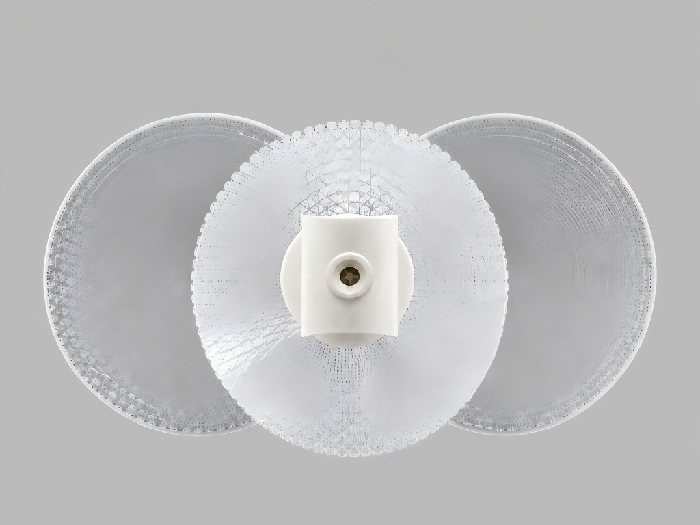
Rotary‑Cut / Rotary‑Mix Aerators
Swirl mixing · Fine‑bubble aeration · High oxygen‑transfer efficiency
Rotary‑cut / rotary‑mix aerators are innovative high‑efficiency aeration units. They utilise swirl‑shear principles to achieve thorough air‑water mixing and generate fine, uniform bubbles for improved oxygen‑transfer performance. Combining the strengths of fine‑bubble aeration and hydrodynamic agitation, these aerators work well for high‑strength organic wastewater, biochemical tanks, oxidation ditches, SBR and MBR biological processes.
Rotary‑cut aerators shear incoming airflow by swirling motion to maximise gas‑liquid contact. Rotary‑mix aerators rely on multi‑port diffusion together with swirling turbulence to deliver superior oxygenation and energy‑saving operation.
Product Models
| Model Category | Construction Style | Dimension (mm) | Material | Connection Type | Typical Application |
|---|---|---|---|---|---|
| Rotary‑Cut Aerator | Swirl‑shear structure | Φ160 / Φ200 | ABS, PVC, EPDM | Threaded | High‑strength wastewater, biochemical tanks |
| Rotary‑Mix Aerator | Multi‑port swirl‑mix structure | Φ160 / Φ200 | ABS, PVC, EPDM | Quick‑connect | Municipal sewage, oxidation ditches |
| High‑efficiency Energy‑saving Rotary‑Cut Aerator | Dense fine‑pore layout | Φ160 | EPDM | Threaded | Industrial wastewater, deep‑water tanks |
| Corrosion‑resistant Rotary‑Mix Aerator | Reinforced engineering‑plastic housing | Φ160 | PTFE | Quick‑connect | Chemical, electroplating and pharmaceutical wastewater |
Structural Features
Rotational airflow shearing produces ultra‑fine bubbles, achieving 30‑40 % oxygen‑utilisation efficiency.
Combined swirl flow and fine‑pore action creates sufficient gas‑liquid contact for excellent oxygenation output.
Swirl flow passages deliver continuous self‑cleaning, preventing sludge accumulation and blockages.
Constructed from robust engineering plastics including ABS, PVC and PTFE for reliable acid‑alkali resistance.
Modular construction fits both new‑build and retrofit projects with straightforward maintenance workflows.
Performance Specifications
| Item | Specification |
|---|---|
| Aerator Dimensions | Φ160 / Φ200 |
| Operating Air Flow | 2‑6 m³/h |
| Oxygen Utilisation Efficiency | 30‑40 % |
| Aeration Head Loss | 180‑280 mmH₂O |
| Average Pore Size | 80‑100 μm |
| Material | ABS, PVC, EPDM, PTFE |
| Mounting Type | Fixed / Retractable lift‑out |
| Applicable Water Depth | 2.5‑5.0 m |
| Service Life | 3‑8 years (subject to material & operating conditions) |
Product Advantages
Selection Guide
| Selection Factor | Available Options | Description | Recommended Use‑case |
|---|---|---|---|
| Construction Type | Rotary‑Cut | Generates fine bubbles with high oxygen‑transfer performance | High‑strength wastewater, biochemical tanks |
| Rotary‑Mix | Delivers homogeneous mixing with outstanding energy‑saving results | Municipal sewage, oxidation ditches | |
| Material Options | ABS / PVC | Cost‑effective for conventional wastewater treatment | Municipal wastewater treatment plants |
| PTFE | Excellent corrosion‑resistance and high‑temperature tolerance | Chemical & electroplating wastewater | |
| Mounting Style | Fixed‑mount | Robust and stable for new‑build facilities | Municipal wastewater treatment plants |
| Retractable lift‑out | Convenient servicing for modernisation projects | Industrial‑wastewater treatment systems |
CONTACT US | REQUEST A QUOTE
Similar Products
Related Products
FAQ
Q:What is the difference between rotary‑cut aerators and rotary‑mix aerators?
A:Rotary‑cut aerators shear bubbles via swirling flow and are optimised for high‑strength wastewater. Rotary‑mix aerators use multi‑port diffusion with turbulent mixing and are better suited for municipal sewage applications.
Q:Are these aerators prone to clogging?
A:No. Self‑cleaning swirl‑flow passages effectively inhibit sludge build‑up and blockages.
Q:What oxygen‑utilisation rate can be achieved?
A:Oxygen utilisation reaches 30‑40 % under operating water depth of 3‑5 m.
Q:Are custom sizes available?
A:Yes. Custom dimensions within Φ160‑Φ200 can be supplied according to tank depth and airflow requirements.
Q:Can they be used together with disc or tube fine‑bubble aerators?
A:Yes. Combined aeration layouts help raise overall oxygen‑transfer efficiency and cut energy consumption.
Q: What mounting options are available for rotary‑cut aerators?
A: Both fixed‑mount and retractable lift‑out installation are supported. Fixed‑mount delivers solid performance for new‑build projects; retractable lift‑out is preferred for retrofits or tanks requiring regular inspection.
Q: How does a rotary‑mix aerator work?
A: It combines swirl‑flow channels and fine‑pore membrane elements to generate high‑velocity rotating airflow inside water. This intensifies gas‑liquid mixing, improves oxygen‑transfer efficiency and lowers overall energy demand.
Q: What kinds of wastewater are suitable for rotary‑cut / rotary‑mix aerators?
A: They handle high‑strength organic wastewater, municipal sewage, chemical, electroplating, food‑processing and pharmaceutical effluents.
They perform exceptionally well in systems with high suspended‑solid loads and high biological loading rates.
Q: What maintenance interval is recommended?
A: Inspect membrane condition and swirl‑flow passages every 6‑12 months. Clean or replace components if uneven bubbling or increased head loss is observed.
Need Custom‑Tailored Solutions?
We provide technical support, product selection guidance and fast quotation services.