In wastewater‑treatment engineering, the physical structure of bio‑media directly governs mass‑transfer efficiency, biofilm formation rate, operational stability and maintenance expenditure. Polyhedral hollow‑balls and sponge bio‑media are two widely‑used biological packing materials, with clear distinctions in structural design, performance and suitable operating conditions. This article compares them from a practical engineering perspective to support accurate media‑selection for field projects.
1. Fundamental Structural Differences
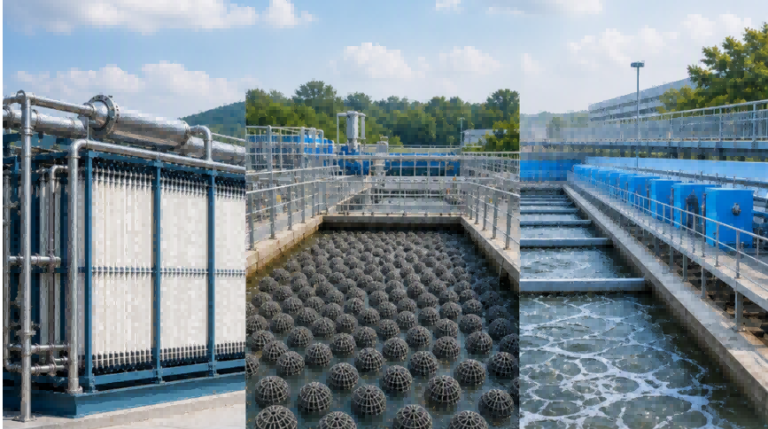
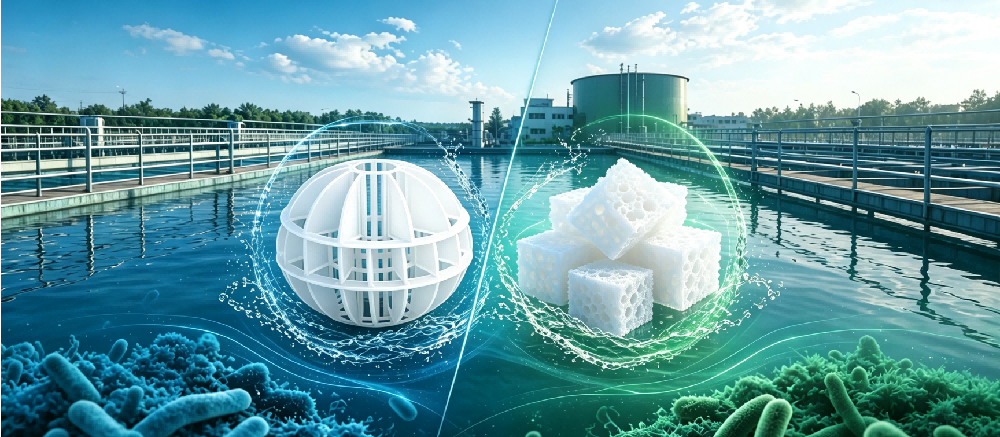
(1). Polyhedral Hollow‑Ball: Multi‑faceted Support Structure with High Void Fraction
Manufactured as hollow spheres reinforced by multi‑layer rib frameworks. Key characteristics:
‑ Multi‑faceted rib supports build a rigid spherical frame
‑ High void fraction (≥90 %) delivers low resistance for gas‑liquid flow
‑ Light‑weight PP / PE material for easy loading and installation
‑ Resistant to scaling and clogging; well‑suited for high‑air‑flow conditions
Its core design purpose: maximise gas‑liquid contact area while keeping flow resistance low, optimised for mass‑transfer‑oriented applications.
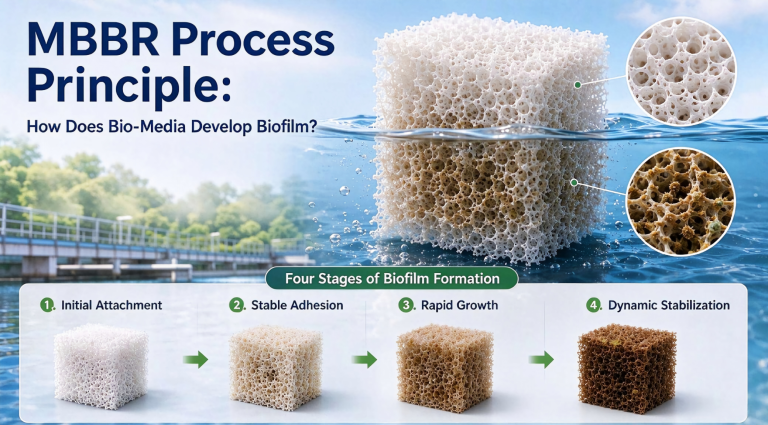
(2). Sponge Bio‑Media: Hydrophilic Porous Structure with Large Specific Surface Area
Fabricated from hydrophilic modified polyurethane sponge with abundant internal micro‑pores. Key characteristics:
‑ Porous sponge matrix provides large specific surface area
‑ Strong hydrophilicity accelerates biofilm startup and attachment
‑ Complex internal pore network offers stable habitats for biofilm growth
‑ Compressible flexible construction tolerates hydraulic shock loads
Its core design purpose: provide extensive attachment sites for biofilm and boost biochemical reaction performance, primarily intended for biological wastewater treatment.
2. Performance Differences Derived from Structure
(1). Gas‑liquid Mass‑Transfer versus Biofilm Development
‑ Polyhedral hollow‑ball: open geometry favours thorough gas‑liquid contact
‑ Sponge bio‑media: intricate internal pores support stable long‑term biofilm growth
(2). Flow Resistance
‑ Polyhedral hollow‑ball: low resistance, ideal for high‑air‑flow and high‑ventilation environments
‑ Sponge bio‑media: higher flow resistance yet superior biological reaction efficiency
(3). Biofilm Formation Speed
‑ Sponge bio‑media: faster biofilm development driven by hydrophilic surface and porous architecture
‑ Polyhedral hollow‑ball: moderate biofilm growth due to relatively smooth outer surfaces
(4). Maintenance & Cleaning
‑ Polyhedral hollow‑ball: virtually maintenance‑free operation
‑ Sponge bio‑media: requires periodic backwashing or replacement to prevent pore clogging
3. Typical Application Comparison
| Media Type | Structural Features | Suitable Operating Conditions | Unsuitable Conditions |
|---|---|---|---|
| Polyhedral Hollow‑Ball | Multi‑rib hollow geometry, low flow resistance | Scrubber towers, absorption towers, cooling towers, desulphurisation towers | Biochemical tanks treating high‑strength organic wastewater |
| Sponge Bio‑Media | Hydrophilic porous structure, large specific surface area | Biochemical tanks, MBBR systems, pre‑MBR zones, plant retrofitting & upgrading | Heavy air‑flow shock, feed water prone to fouling & blockage |
4. Practical Media‑Selection Guidance for Site Conditions
- For mass‑transfer‑dominated processes
Choose polyhedral hollow‑ball packing: waste‑gas scrubbers, cooling towers and chemical process towers. - For biological‑treatment‑focused workflows
Choose sponge bio‑media: biochemical tanks, retrofitting projects, ammonia‑nitrogen removal and MBBR systems. - For fluctuating feed water with high clogging risk
Prioritise polyhedral hollow‑ball. Its open‑frame design resists fouling. - When fast biofilm startup and higher treatment capacity are required
Prioritise sponge bio‑media, leveraging its large specific surface area for rapid biofilm formation.
5. Conclusion: Structure Defines Performance, Performance Defines Application
Structural distinctions set different engineering roles for these two media products.
‑ Polyhedral hollow‑ball: preferred for gas‑liquid mass‑transfer, low‑resistance and steady‑running scenarios
‑ Sponge bio‑media: optimised for biological treatment, rapid biofilm build‑up and enhanced reaction capacity
In real‑world projects, select media comprehensively according to water‑quality characteristics, treatment targets, tank geometry and operating regimes to achieve optimal treatment output.