In any water treatment project, valves play a central role in controlling flow, protecting equipment, and ensuring stable system operation. Whether the application involves municipal wastewater, industrial effluent, or reclaimed water, selecting the right valve directly affects system reliability, energy consumption, and long term maintenance costs.
With varying water quality, pressure, flow conditions, and automation requirements, proper valve selection becomes a critical part of engineering design and equipment planning.
1. The Role of Valves in Water Treatment Systems
Valves in water treatment systems serve several essential functions:
On/off control — managing influent, effluent, sludge discharge, backwash, and process switching.
Flow regulation — adjusting aeration volume, chemical dosing, recirculation flow, and membrane suction.
System protection — preventing backflow, over pressure, and leakage.
Automation integration — working with PLC, sensors, pumps, and actuators to maintain stable operation.
A reliable valve supports system stability; a well matched valve reduces operational costs and improves long term performance.
2. Common Valve Types Used in Water Treatment
1) Ball Valves (Manual / Electric / Pneumatic)
Straight flow path, low resistance, tight sealing, suitable for frequent on/off cycles. Typical applications: aeration control, MBR influent/effluent, chemical dosing, sludge return.
2) Butterfly Valves (Manual / Electric / Pneumatic)
Compact structure and cost effective, ideal for large diameter pipelines. Typical applications: air pipelines, main influent and effluent lines.
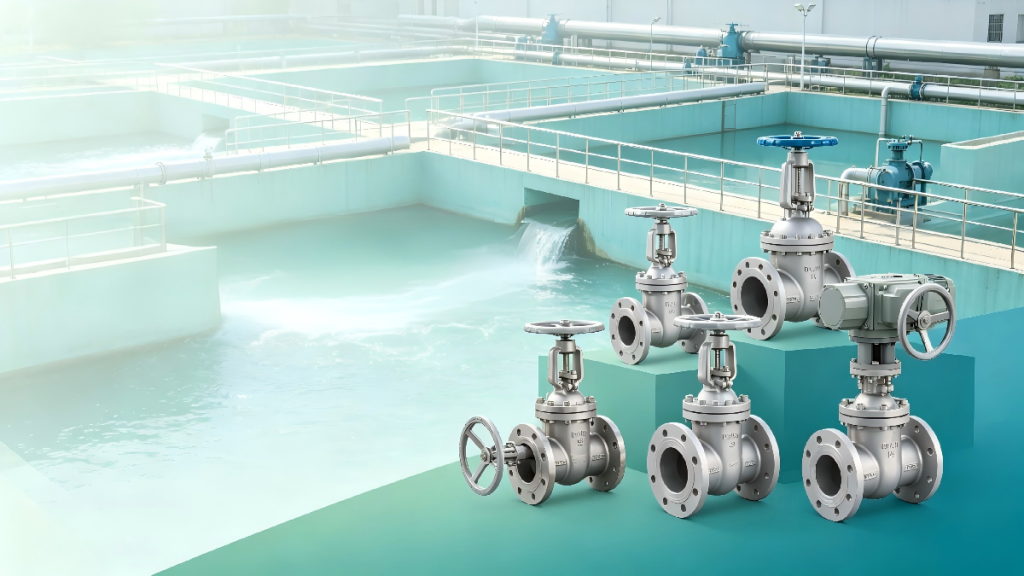
3) Gate Valves
Reliable sealing for fully open or fully closed conditions; not suitable for throttling. Typical applications: pump rooms, main water lines, clean water transfer.
4) Check Valves
Prevent backflow and protect pumps and pipelines. Typical applications: lift pumps, recirculation pumps, discharge lines.
5) Control Valves (Electric / Pneumatic)
Designed for precise flow or pressure regulation; essential for high automation systems. Typical applications: aeration control, chemical dosing, membrane suction regulation.
3. Key Factors in Valve Selection
① Select Valve Materials Based on the Medium
Clean water: PVC, UPVC, stainless steel
Wastewater: stainless steel, carbon steel, rubber lined
Chemical dosing: PTFE lined, PP, PVDF
Incorrect material selection leads to corrosion, leakage, and shortened service life.
② Match Valve Pressure Rating to System Requirements
Different process sections require PN10, PN16, PN25, or higher. Underrated pressure causes leakage; overrated pressure increases cost.
③ Choose the Right Actuation Method
Manual — low frequency operation
Electric — precise flow control
Pneumatic — fast response, suitable for frequent cycling
Pneumatic ball valves are widely used in wastewater treatment due to reliability and speed.
④ Select Automation Accessories Based on Control Needs
Solenoid valves
Limit switches
Air treatment units
Positioners (for control valves)
Accessories determine whether the valve can operate reliably within the control system.
⑤ Consider Installation Space and Connection Type
Flanged — stable, suitable for large diameters
Threaded — suitable for small diameters
Wafer — space saving
Space constraints in treatment plants often influence connection selection.
4. Valve Recommendations for Different Water Treatment Processes
MBR Systems
Influent: pneumatic ball valve
Suction: electric control valve
Backwash: pneumatic ball valve
Sludge discharge: ball valve or gate valve
Key requirement: stable action, reliable sealing, frequent cycling.
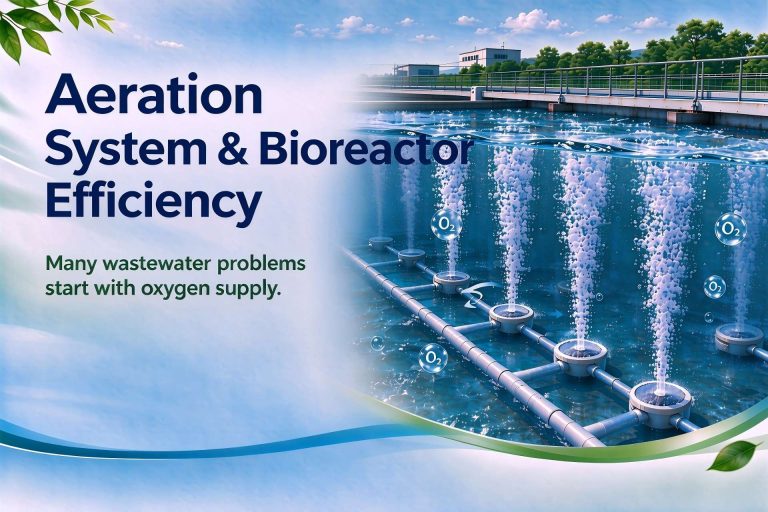
Aeration Systems
Airflow regulation: pneumatic control valve
Air pipeline on/off: butterfly valve
Key requirement: fast response, corrosion resistance, stable pressure control.
Chemical Dosing Systems
Chemical on/off: ball valve
Precise dosing: electric control valve
Key requirement: corrosion resistance and tight sealing.
Sludge Systems
Sludge return: ball valve
Sludge discharge: gate valve or ball valve
Key requirement: straight flow path, low blockage risk.
5. Conclusion: Proper Valve Selection Builds Long-Term System Stability
Valves may seem like small components, but they are essential to the reliability of any water treatment system. A well selected valve improves system stability, reduces energy consumption, lowers maintenance costs, and supports long term compliance.
For projects involving new installations, system upgrades, or operational optimization, valve selection should be addressed early in the design process. Matching valve type, material, pressure rating, and automation level to actual operating conditions is the foundation of a stable water treatment system.