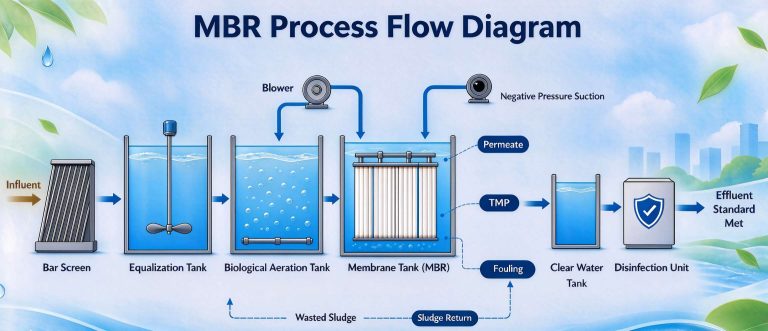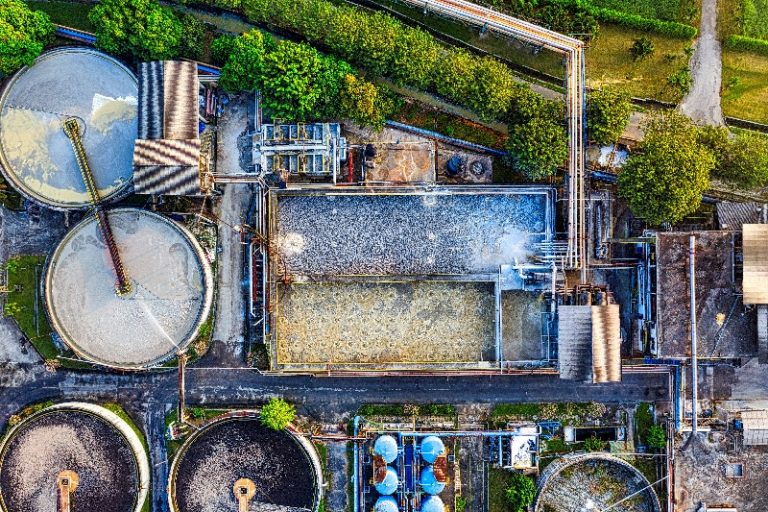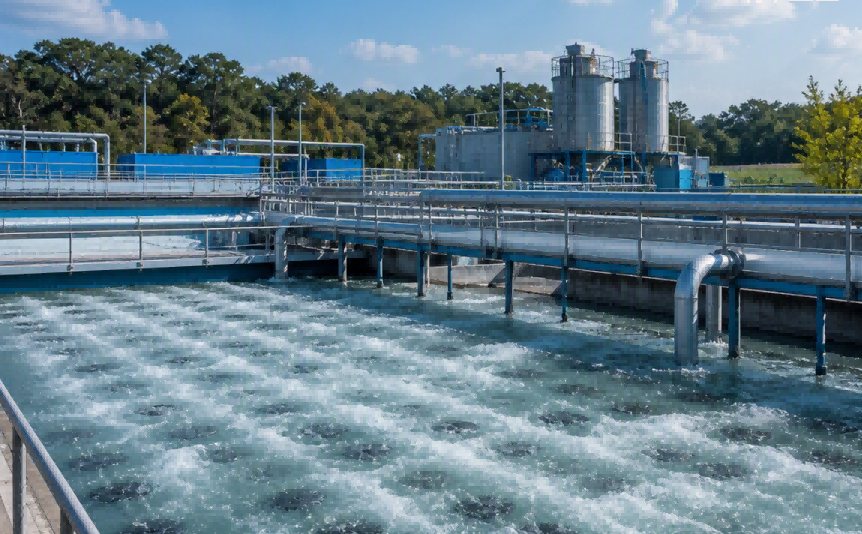
In wastewater‑treatment processes, the aeration system acts as the heart of all biochemical reactions. It governs oxygen supply efficiency, microbial activity, overall energy consumption and final effluent quality. Whether you are working with proven A²/O, MBBR or high‑performance MBR processes, aeration remains a critical factor that shapes plant operational performance.
1. Core Functions of an Aeration System
(1). Supply Oxygen to Sustain Microbial Activity
Aeration transfers atmospheric oxygen into the bulk water, creating living conditions for aerobic microorganisms. With sufficient dissolved oxygen, these microbes break down organic contaminants and remove ammonia‑nitrogen to purify wastewater.
(2). Maintain Homogeneous Mixed Liquor and Prevent Sedimentation
Beyond oxygen supply, aeration generates hydraulic agitation. It keeps mixed liquor well‑blended throughout the tank and inhibits sludge settling — an essential condition for stable system performance.
(3). Boost Biochemical Reaction Rates
Oxygen Transfer Efficiency (OTE) is the key performance metric for aeration hardware. High‑efficiency aeration accelerates biochemical reactions, shortens hydraulic retention time and cuts energy use.
2. Common Types of Aerators & Their Characteristics
| Type | Construction Features | Advantages | Typical Application Scenarios |
|---|---|---|---|
| Membrane Disc Fine‑Bubble Aerator | Uniform fine pores, high oxygen‑transfer efficiency | Energy‑saving, easy maintenance | Municipal sewage, biochemical tanks |
| Tube Fine‑Bubble Aerator | Optimised for deep tanks and oxidation ditches | Flexible layout, anti‑clogging performance | Industrial wastewater, high‑loading systems |
| Diffused Aerator | Larger‑size bubbles with strong mixing power | Resistant to clogging, suitable for pre‑treatment | High‑strength wastewater, equalization tanks |
| Dynamic Aerator | Mechanically driven, high oxygen utilisation | Works well for high‑viscosity wastewater | Chemical, food‑processing and paper‑making industries |
3. Key Design Parameters for Aeration Systems
(1). Oxygen Transfer Efficiency (OTE)
Directly impacts plant energy cost and effluent quality. Design calculations should take tank depth, bubble size and membrane material into full consideration.
(2). Air‑to‑Water Ratio
Excessive airflow wastes power; insufficient airflow leads to oxygen shortage. The typical recommended air‑to‑water ratio ranges from 10:1 to 20:1.
(3). Aeration Uniformity
Influences microbial distribution and reaction kinetics. Uniform air distribution can be achieved by adopting high‑precision membrane elements and optimising air‑piping layout.
(4). Material Selection & Corrosion Resistance
Materials including EPDM, silicone and PTFE adapt to varied water‑quality conditions and extend service life.
4. Trends Toward Energy‑saving & Intelligent Aeration
Modern aeration systems are evolving toward energy‑efficient and smart automatic control: ‑ Variable‑frequency blowers + DO closed‑loop control: adjust airflow according to real‑time dissolved‑oxygen readings.
‑ High‑precision fine‑pore membrane technology: improves oxygen‑transfer efficiency and reduces power draw.
‑ Modular construction: simplifies maintenance and future capacity expansion.
‑ Intelligent monitoring system: real‑time tracking of pressure, airflow and dissolved‑oxygen to optimise operating set‑points.
These innovations transform aeration units from pure energy consumers into intelligent energy‑saving components, which are widely adopted during wastewater‑treatment‑plant upgrading projects.
5. Conclusion: Aeration Drives Biochemical Treatment
Regardless of process evolution, aeration stays central to wastewater treatment. It not only defines oxygen supply performance but also determines the whole plant’s energy consumption and operational stability. Selecting appropriate aerator types, optimising air‑distribution piping and deploying intelligent control are critical steps to boost overall wastewater‑treatment efficiency.